
How to Stay Consistent with Your Wellness and Self-Care Goals
How to Stay Consistent with Your Wellness and Self-Care Goals
Feb 12, 2026
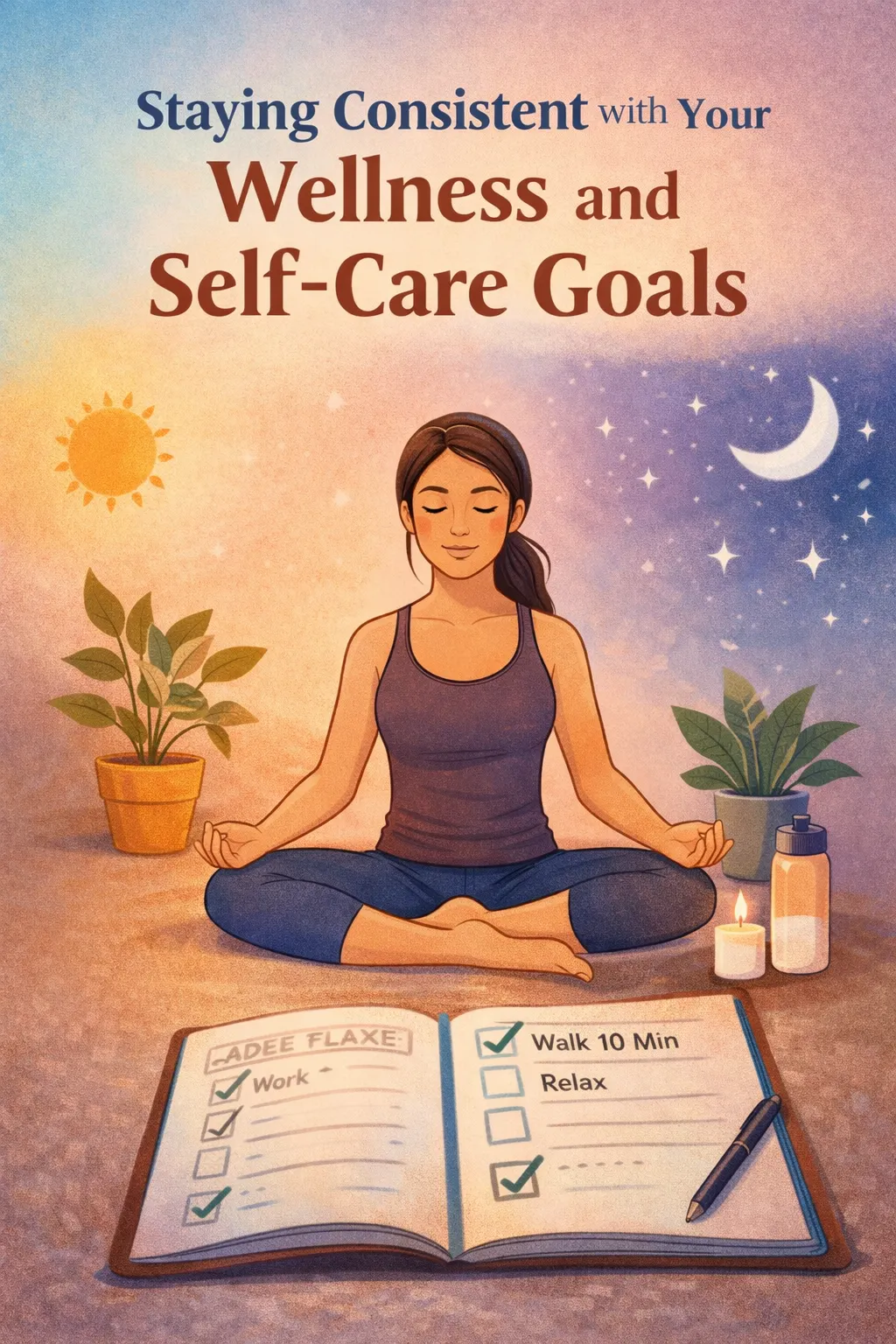
Busy parents, shift workers, and professionals carrying full calendars often start general wellness goals with real intent, then watch them fade when life gets loud. The core tension is simple: wellness motivation runs on hope, but healthy lifestyle challenges run on deadlines, fatigue, and the pressure to do self-care practices “right.” When goals are vague or too big to fit a normal week, consistency starts to feel like a personality trait instead of a skill. A steadier approach replaces perfectionism with clarity and beginner self-care strategies that feel doable on ordinary days.
Turn Self-Care Goals Into a Simple Weekly Plan
This process helps you choose self-care goals that actually matter to you, then prioritize and shape them into a small, realistic plan you can repeat on a normal week. It matters because consistency comes from clear decisions and manageable actions, not perfect motivation.
- Step 1: Choose one meaningful self-care “lane”
- Start by picking just one area to focus on for the next 2 to 4 weeks: physical (movement, sleep), mental (stress, focus), emotional (connection, boundaries), or practical (appointments, meals, home reset). Write a one-sentence “why” that makes it personal, because goals anchored to meaning are easier to protect when you are tired.
- Step 2: Turn your intention into a specific goal
- Replace “be healthier” with a clear target you can do and track, such as “walk 10 minutes after dinner” or “do a 3-minute breathing break before my shift.” People who set specific mental wellness goals are more likely to see progress than people relying on vague intentions, so make yours concrete.
- Step 3: Prioritize using the Impact x Effort test
- List 3 to 5 possible actions, then score each one 1 to 5 for impact and 1 to 5 for effort. Choose the option with the best payoff that still feels easy, since high-effort goals are usually the first to disappear during busy weeks.
- Step 4: Set a “minimum” and an “ideal” version
- Define the smallest version you will do even on rough days (minimum), plus a slightly bigger version for good days (ideal). This keeps the habit alive without all-or-nothing thinking, and it gives you a built-in way to adapt when schedules change.
- Step 5: Put it on a calendar with a simple checkpoint
- Schedule your minimum action on 2 to 4 specific days and attach it to an existing anchor, like after brushing your teeth or right after lunch. Add one weekly 5-minute review to note what worked, what got in the way, and what you will adjust, since most progress comes from small course-corrections over time.
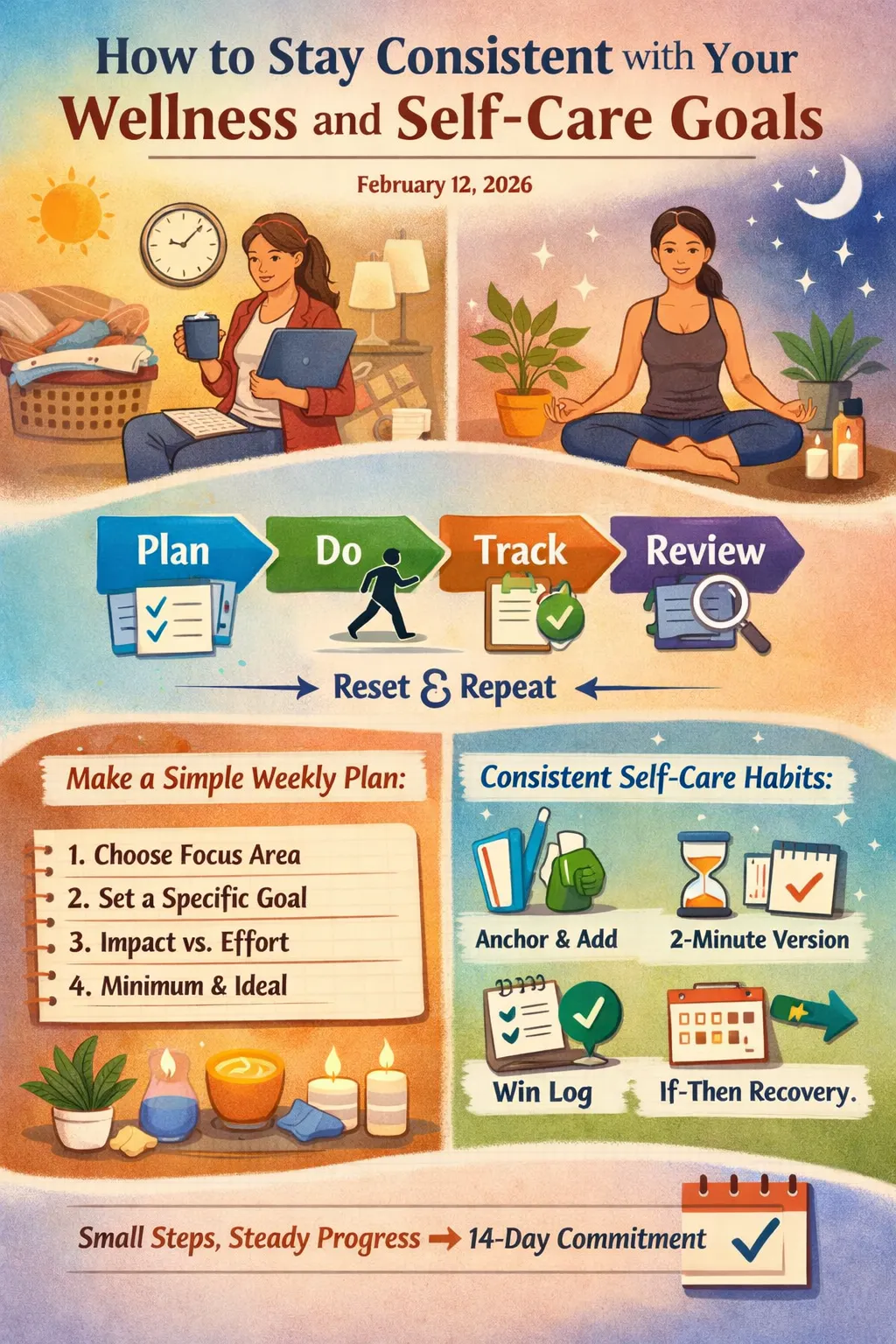
Plan → Do → Track → Review → Reset
Consistency is easier when you follow the same small rhythm every week, even when your energy changes. Use this workflow to protect time for your daily wellness routine, capture a simple signal of progress, and make tiny adjustments before you drift off track. Keep it light, because research on habit formation shows timelines vary widely by person.
Consistency is easier when you follow the same small rhythm every week, even when your energy changes. Use this workflow to protect time for your daily wellness routine, capture a simple signal of progress, and make tiny adjustments before you drift off track.
Keep it light, because research on habit formation shows timelines vary widely by person.Each stage feeds the next: planning creates space, tracking creates feedback, and reviewing turns that feedback into a smarter schedule.
Over time, you are not relying on motivation, you are relying on a system that keeps you moving.
Habits That Keep Self-Care Consistent
When motivation dips, simple habits keep your wellness goals moving forward without drama. Pick one or two, repeat them long enough to feel automatic, and let the consistency build confidence.
Anchor-and-Add Routine
- What it is: Use habit stacking to add one self-care step after brushing teeth.
- How often: Daily
- Why it helps: A reliable cue reduces decision fatigue and missed days.
Minimum-Effective Self-Care
- What it is: Set a 2-minute version of your routine you can always complete.
- How often: Daily
- Why it helps: It protects identity and momentum on hard days.
Ten-Second Win Log
- What it is: Check a box and write one word about energy.
- How often: Daily
- Why it helps: Quick feedback helps you adjust without overthinking.
If-Then Recovery Plan
- What it is: Write one rule for setbacks, like “If I miss, I restart tomorrow.”
- How often: Weekly
- Why it helps: It prevents all-or-nothing spirals after a slip.
Weekly Self-Care Appointment
- What it is: Schedule one longer session and prep supplies the night before.
- How often: Weekly
- Why it helps: Planning makes follow-through easier when life gets busy.
Common Questions About Staying Consistent
Q: How can I select wellness and self-care goals that are realistic and tailored to my lifestyle?
A: Start by choosing one goal that fits your current season, not your ideal week. Tie it to a specific constraint you actually have, like mornings, limited privacy, or low energy, and make the first step small enough to do on a hard day. Remember that 80 percent of people fail to keep their New Year's resolutions, so “realistic” is a strength, not a compromise.
Q: What are effective ways to create and maintain a consistent self-care and wellness plan?
A: Keep your plan simple: pick a short daily baseline plus one optional upgrade for higher-energy days. Track it with a quick checkbox or note so you can spot patterns and adjust early. Consistency usually comes from clarity and repetition, not intensity.
Q: How do I stay motivated and positive when I face setbacks or don’t meet my wellness goals?
A: Treat setbacks as data, not a verdict, and reset using a clear restart rule like “next action, next day.” Reduce guilt by shrinking the goal temporarily, then rebuild once stress eases. This protects your confidence while still keeping you in motion.
Q: What strategies can help me make time for self-care amidst a busy or unpredictable schedule?
A: Use “bookends”: a 2 to 5 minute practice right after waking and right before bed, even when the middle of the day is chaos. Keep a short menu of options (walk, stretch, breathe, prep food) and choose based on time available. Planning for disruption is often what makes self-care doable.
Q: If I’m feeling stuck or uncertain about my life direction, how can pursuing new educational opportunities support my overall well-being and motivation?
A: Learning can restore a sense of direction by giving you structure, progress markers, and a future-focused project you control. Choose formats that protect your wellness, like flexible pacing, predictable study blocks, and realistic course loads, and if you’re exploring a computer science degree online, the same planning applies. Since 1 in 8 people face mental health challenges, it is wise to pair education goals with stress supports like sleep, movement, and social connection.
Sustaining Consistency with a 14-Day Self-Care Commitment
Staying consistent with wellness is hard because real life keeps shifting, and motivation rarely shows up on schedule. A positive mindset, sustaining wellness commitment through small standards, and leaning on long-term self-care strategies keeps the focus on progress instead of perfection. Over time, that approach builds persistence, makes setbacks less personal, and turns self-care into a steadier rhythm. Consistency comes from small promises kept, not perfect weeks. Choose one small action and commit to it for the next 14 days, tracking it with a simple checkmark. That kind of steady follow-through matters because it strengthens resilience and supports health in every season of the wellness journey.